Penn asks for three short answers of 50 to 200 words each: a thank you note, a community answer, and one prompt for the undergraduate school you choose. Dual degree programs add more. The core supplement has a combined maximum of 600 words. Short means every sentence has to work. For each prompt below, we offer expert guidance on what each question is really testing and how to answer them.
What is Penn’s acceptance rate?
For the Class of 2029, Penn’s overall acceptance rate was 4.9%, and its Early Decision (ED) acceptance rate was 13.3% based on Penn’s 2025–2026 Common Data Set.
- Overall: 4.9%
- ED: 13.3%
- SAT 25th percentile: 1510
- SAT 50th percentile: 1550
- SAT 75th percentile: 1570
What SAT score do you need for Penn?
Penn requires the SAT or ACT. The middle 50 percent of admitted students scored 1510 to 1570. A score in that range helps put your application in the pile to be read. It does not get you in. More applicants have perfect scores than Penn has places. That is why the essays matter here.
When are Penn’s application deadlines?
Early Decision: November 1st. Regular Decision: January 5th. Early Decision at Penn is binding. If you are admitted, you withdraw your other applications and enroll.
Does Penn have a “Why Penn” essay in 2026/27?
Yes, split across two prompts. The community prompt asks how you will explore community at Penn, which is “Why Penn” through the people and places. The school specific prompt asks about your subject at the College, Wharton, Engineering or Nursing, which is “Why Penn” through the academics. Penn’s own instructions say to be precise about both why Penn and why that school. Keep the clubs and the campus in the community answer and the courses and research in the school answer. Guidance for both is below.
Penn supplemental essay prompts 2026/27 and how to answer them
Prompts are quoted from Penn’s Writing page, linked at the bottom. Penn says the short answers are meant to show how you consider others, how you think about community, what motivates your academic aspirations, and what draws you to Penn. Those map onto the three prompts in order.
1. A thank you note to someone you have not yet thanked (50 to 200 words)
The prompt. Write a short thank-you note to someone you have not yet thanked and would like to acknowledge. (We encourage you to share this note with that person, if possible, and reflect on the experience!)
What Penn is testing. How you consider others. That is Penn’s own phrase for this prompt. The reader is looking at who you chose, what you noticed about what they did, and whether you can be specific about why it mattered. The choice of person says as much as the note. Penn adds that it hopes you actually send it, which tells you the tone it wants: a real note to a real person, not an essay addressed to admissions.
How to answer. Write it as a letter. Name the person in the first line. Spend the middle on one specific thing they did, with the detail that shows you were paying attention. End with what it changed for you. Keep it under 200 words. A note that could be sent is the goal.
Avoid. Thanking a parent or teacher in general terms, which is the most common answer and the hardest to make specific. Using the note to list your own achievements. And writing to the admissions reader rather than to the person.

2. How you will explore community at Penn (50 to 200 words)
The prompt. How will you explore community at Penn? Consider how Penn will help shape your perspective, and how your experiences and perspective will help shape Penn.
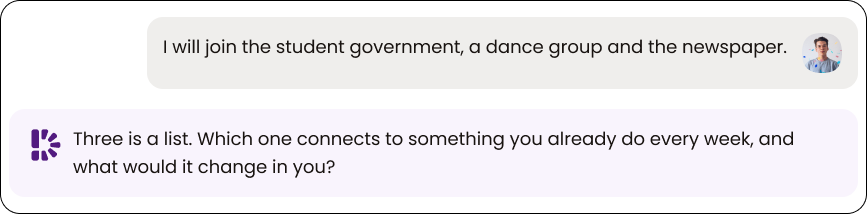
What Penn is testing. Whether you have looked at Penn beyond the name, and whether you know what you would do there. The prompt runs in both directions: what Penn will do to you and what you will do to Penn. Most answers only do the second. The reader wants to see one or two specific Penn communities, named, connected to something you already do, and a sentence about what you expect them to change in you.
How to answer. Pick one or two communities at Penn you have actually examined: a club, a program, a residential option, a research group. For each one, say what you already do that connects to it and what you would bring. Then answer the first half of the prompt in one sentence: what you expect that community to change in how you see things. About 90 words per community.
Avoid. A list of five clubs with no reason attached. Philadelphia as the whole answer. And repeating anything from the school specific prompt below. The academic reasons belong there.
3. The school specific prompt
Every applicant answers one of the four prompts below, for the undergraduate school they chose as their single degree option. Penn says to be precise about why that school. The four schools have different curricula and the prompts are written to test whether you know it.
College of Arts and Sciences (50 to 200 words)
The prompt. The College of Arts and Sciences is designed to foster discovery and connection. Describe something you are curious about—something you’d like to learn more about or find a new approach to—and how you might pursue that curiosity in the College.
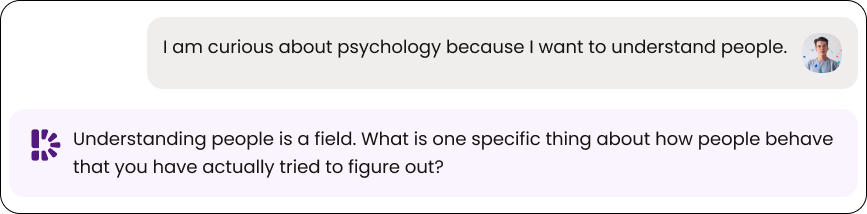
What Penn is testing. Whether your curiosity is specific and whether you have looked at how the College is organized. The College is the broadest of Penn’s four schools, so the prompt asks you to narrow: one thing you are curious about and one way to pursue it. Penn points you to the College’s departments and areas of study for a reason.
How to answer. Spend about 120 words on the curiosity, with evidence that it is real: a question you keep returning to, something you read or measured or argued about that left you with a better question. Spend about 60 on the fit: one department, one program, one way the College lets you cross subjects. One thing, explained, beats five, listed.
Avoid. Naming a professor you have never read. A cause instead of a question. And the origin story, where most of the words explain how you first got interested.
The Wharton School (50 to 200 words)
The prompt. Wharton prepares its students to make an impact by applying business methods and economic theory to real-world problems, including economic, political, and social issues. Discuss a current issue of importance to you and how you hope a Wharton education would help you explore it.
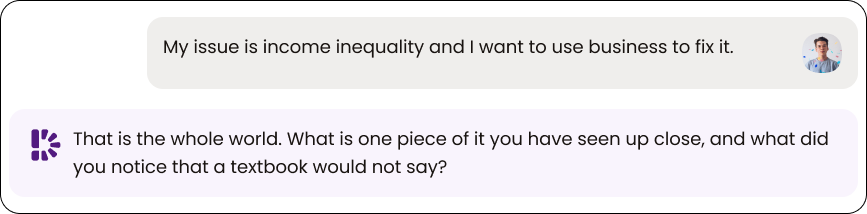
What Penn is testing. Whether you see business as a way to work on a problem rather than a career path. The prompt asks for a current issue first and Wharton second. The reader wants to see that you understand the issue well enough to say what is hard about it, and that you can name what business methods or economic thinking would add.
How to answer. Name the issue in the first sentence, as narrowly as you can. Spend the middle on what you know about it from your own experience or reading, including the part that is unresolved. Spend the last 60 words on how a Wharton education helps: a concentration, a way of analyzing the problem, a specific tool. Connect it to the issue, not to your résumé.
Avoid. “I want to be an entrepreneur” with no problem attached. Issues so large that nothing can be said about them. And treating Wharton as a brand rather than a set of methods.
Penn Engineering (50 to 200 words)
The prompt. Penn Engineering prepares its students to become leaders in technology by combining a strong foundation in the natural sciences and mathematics with depth of study in focused disciplinary majors. Describe how you plan to pursue your engineering interests at Penn, particularly within the intended major you selected.
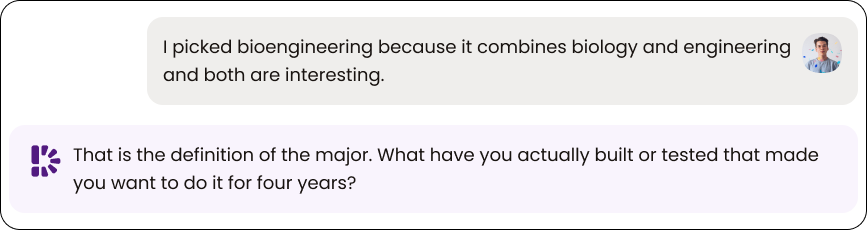
What Penn is testing. Whether you know what your intended major actually involves and whether you have done any engineering. The prompt names the major you selected, so the reader will check your answer against it. Penn points you to the curriculum for that major.
How to answer. Start with one thing you have built, fixed, measured or programmed, and what happened when it did not work. That is your engineering interest, shown. Then name one or two things in your intended major’s curriculum, a course, a lab, a research group, and say what you would do there. About 100 words on you, 80 on Penn.
Avoid. The robotics club résumé. “I have loved math since I was five.” And a major chosen because it sounds impressive rather than because you have done anything in it.
School of Nursing (50 to 200 words)
The prompt. Penn Nursing intends to meet the health needs of society in a global and multicultural world by preparing its students to impact healthcare by advancing science. Why are you applying to Nursing, where do you see yourself professionally in the future, and how will you contribute to our mission of promoting equity in healthcare?
What Penn is testing. Three things, named in the prompt: why nursing, where you are headed, and how you will contribute to equity in healthcare. The reader wants a real reason for choosing nursing, a direction that is specific without being a job title, and a concrete understanding of what equity in healthcare means from something you have seen.
How to answer. Answer all three parts in order and give each about 60 words. For why nursing, use one experience with care, given or received. For the future, name a kind of work rather than a title. For equity, name one specific gap you have seen and what you would do about it.
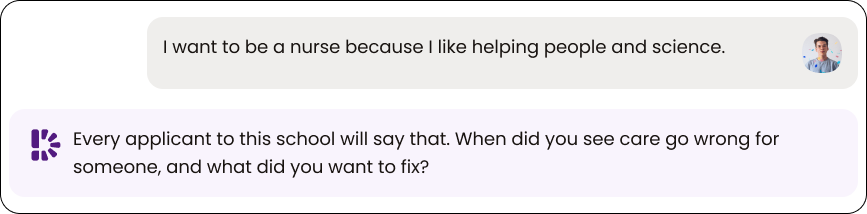
Avoid. Writing about medicine and swapping in the word nursing. Skipping the equity question, which Penn placed in the prompt on purpose. And “I want to help people,” which every applicant says.
Coordinated dual degree and specialized programs
If you apply to Huntsman, LSM, M&T, NHCM, VIPER or VIC, Penn adds one to three program essays of 50 to 400 words on top of the three above. Penn’s instruction is firm: the three core answers address your single degree school choice, and the program essay addresses the program. Do not mix them. Each program prompt asks the same underlying question, why this combination and what you would do with it, and several ask for a specific problem at the intersection. Answer with a problem, not a career. The full prompts are on Penn’s Writing page, linked below.
Before you write: map the whole application
Your personal statement, activities list and the Penn answers are read as one file. Each piece should add something the others do not. Repeating an interest is fine. Repeating the same evidence wastes space. Think of the reader as someone who has already read everything else in your file before they reach the Penn questions. Penn says this in its own words: it does not need you to summarize the rest of your application.
Write down what the reader already knows about you from the Common App. Then give each Penn answer one thing that list is missing.
As you plan and draft, remember to check Penn’s current rules on AI and essays.
Want help connecting the pieces? Dakota, in College CoPilot’s Application Coach, uses what you have already shared to spot repetition and ask the question you have not answered. The writing stays yours.