Harvard asks for five short answers, each with a 150-word limit (up to 750 words total). Short means every sentence has to work. For each prompt below, we offer expert guidance on what each question is really testing and how to answer them.
What is Harvard’s acceptance rate?
For the Class of 2029, Harvard’s overall acceptance rate was 4.2%; it did not release separate Restrictive Early Action (REA) or Regular Decision (RD) rates.
- Overall: 4.2%
- REA: Not Reported
- SAT 25th percentile: 1510
- SAT 50th percentile: 1550
- SAT 75th percentile: 1580
What SAT score do you need for Harvard?
Harvard requires the SAT or ACT. The middle 50 percent of admitted students scored [SAT 25] to [SAT 75]. A score in that range helps put your application in the pile to be read. It does not get you in. More applicants have perfect scores than Harvard has places. That is why the essays matter here.
When are Harvard’s application deadlines?
Restrictive Early Action: November 1st. Regular Decision: January 1st. Restrictive means no other private college early. Harvard says on its own site that it gives no advantage to early applicants.
Does Harvard have a “Why Harvard” essay in 2026/27?
No. None of the five questions asks why you want to attend. The closest is question 4, which asks how you hope to use a Harvard education, and that is a question about you and your future, not about Harvard. There is no prompt where listing Harvard’s houses, programs or professors earns anything. If you write the words “at Harvard,” check that the sentence still answers the question asked.
Harvard supplemental essay prompts 2026/27 and how to answer them
Prompts are quoted from Harvard’s application requirements page, linked at the bottom. All five are required. Harvard reads them as a set, so plan them together: each one should show a different side of you, and none should repeat your Common App essay.
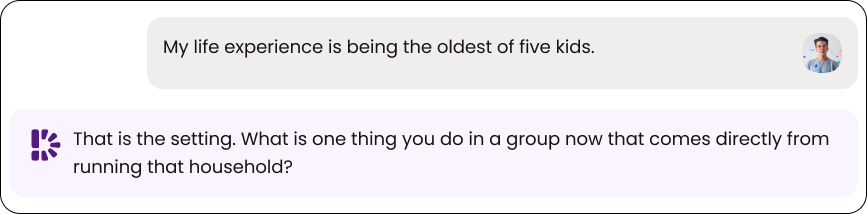
1. Life experiences and how you will contribute (150 words)
The prompt. Harvard has long recognized the importance of enrolling a student body with a diversity of perspectives and experiences. How will the life experiences that shaped who you are today enable you to contribute to Harvard?
What Harvard is testing. Whether you can connect one experience to one contribution. The word that matters is “contribute.” Harvard is not asking you to describe your background. It is asking what you will do with it in a room full of people who do not share it. The reader wants to see a specific stance, habit or skill that came from your life and that other students will benefit from.
How to answer. One experience, not a summary of your identity. Spend about 60 words on a scene from it and 60 on what it taught you, stated as something you now do or believe. Spend the last 30 on the contribution, in plain words: what you will bring to a seminar, a lab group or a dorm conversation because of it. Do not leave the contribution for the reader to infer.
Avoid. The list of identities with no scene underneath. Hardship told as a credential. And the phrase “diverse perspective,” which is the prompt handed back to the reader.
2. A time you strongly disagreed (150 words)
The prompt. Describe a time when you strongly disagreed with someone about an idea or issue. How did you communicate or engage with this person? What did you learn from this experience?
What Harvard is testing. How you handle disagreement, not whether you won. Harvard’s own description of what it looks for includes the willingness to engage respectfully with differing ideas. The prompt asks three things: what the disagreement was, how you engaged, and what you learned. In 150 words the first one gets a sentence and the other two get everything else.
How to answer. State the disagreement in one sentence. Then describe the exchange: what the other person said, what you said back, the moment it got uncomfortable. End with what changed, which can be small. You still disagree, but you understand why a reasonable person holds the other view. That counts.
Avoid. Turning it into a position paper on the issue. At 150 words the argument crowds out the engagement, and the engagement is what Harvard asked about. Hot political topics written as advocacy. And a disagreement you won cleanly, which teaches the reader nothing.

3. Activities, work, travel or family responsibilities that shaped you (150 words)
The prompt. Briefly describe any of your extracurricular activities, employment experience, travel, or family responsibilities that have shaped who you are.
What Harvard is testing. Whether one of the things you do has changed you. The key words are “shaped who you are.” Harvard already has your activities list. This is not a second copy of it. Notice that the prompt names employment and family responsibilities alongside activities. Harvard is telling you that a job or caring for a sibling counts as much as a club, and often says more.
How to answer. Pick one. Spend most of the 150 words on a specific moment inside it and the rest on what it changed in you. The strongest answers often come from the thing with no title and no award: the shift at the restaurant, the Saturday mornings driving a grandparent to dialysis.
Avoid. The résumé walkthrough three activities. Choosing the most impressive activity rather than the one that shaped you. And describing what you did without saying what it did to you.

4. How you hope to use your Harvard education (150 words)
The prompt. How do you hope to use your Harvard education in the future?
What Harvard is testing. Whether you have a direction and a reason for it. Harvard’s stated mission is students who contribute to society throughout their lives, and the word “use” in the prompt points the same way. This is an aspiration question. It is not a career plan and it is not a “Why Harvard” essay. The reader wants to see a problem you care about or a kind of work you want to do, and why.
How to answer. Name the direction in the first sentence. Spend the middle on why it matters to you, with one piece of evidence from your life. End with what you want to be able to do that you cannot do now. You are allowed to be uncertain about the job title. You are not allowed to be vague about the reason.
Avoid. A list of Harvard programs. A ten year plan with a title at the end of it. And “make a difference” or “change the world,” which say nothing.
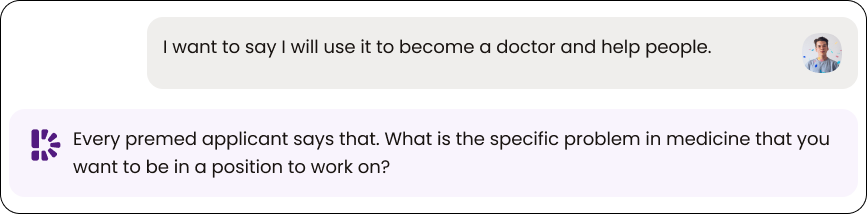
5. Top three things your roommates might like to know about you (150 words)
The prompt. Top 3 things your roommates might like to know about you.
What Harvard is testing. Whether you can be a person rather than an applicant. This is the one light question, and it is placed last for a reason. The reader has just read four serious answers. They want to see who shows up in the dorm.
How to answer. Three concrete things, each with a detail a roommate would actually notice: the habit, the object, the rule. Vary them. One about how you live, one about what you love, one that is simply funny or true. A numbered list is fine. About 50 words each is plenty.
Avoid. A fifth essay with a thesis. Three accomplishments in disguise. And invented quirks. Readers can tell when a detail was chosen to seem interesting rather than because it is true of you. A plain true detail beats a clever invented one every time.
Before you write: map the whole application
Your personal statement, activities list and the five Harvard answers are read as one file. Each piece should add something the others do not. Repeating an interest is fine. Repeating the same evidence wastes space. Think of the reader as someone who has already read everything else in your file before they reach the Harvard questions.
Write down what the reader already knows about you from the Common App. Then give each Harvard answer one thing that list is missing.
As you plan and draft, remember to check Harvard’s guidance on AI and essays.
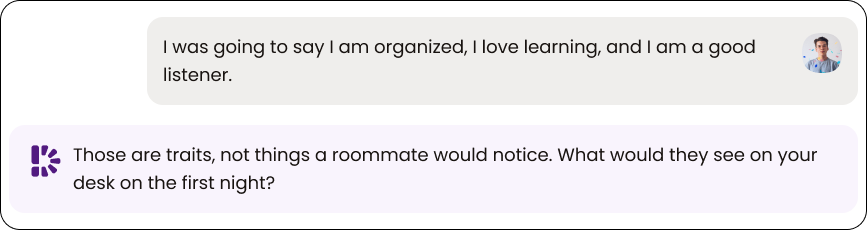
Want help connecting the pieces? Dakota, in College CoPilot’s Application Coach, uses what you have already shared to spot repetition and ask the question you have not answered. The writing stays yours.