Princeton asks for one academic essay, two “Your Voice” essays, three 50 word answers, and a graded paper you have already written. The whole supplement is about 1,100 words. Short means every sentence has to work. For each prompt below, we offer expert guidance on what each question is really testing and how to answer them.
What is Princeton’s acceptance rate?
Princeton’s overall acceptance rate was 4.0% for the Class of 2029, according to its 2025–26 Common Data Set. Princeton has not released separate Single Choice Early Action (SCEA) or Regular Decision (RD) acceptance rates for the Class of 2029.
- Overall: 4.0%
- SCEA: Not Reported
- SAT 25th percentile: 1490
- SAT 50th percentile: 1530
- SAT 75th percentile: 1580
What SAT score do you need for Princeton?
Princeton is test optional for 2026/27 and brings back the SAT or ACT requirement for 2027/28. If you submit, the middle 50 percent of enrolled students scored 1490 to 1580. A score in that range gets your essays read. It does not get you in. More applicants have perfect scores than Princeton has places. That is why the essays matter here.
When are Princeton’s application deadlines?
Single Choice Early Action: November 1st. Regular Decision: January 1st. Single Choice means no other private college early.
Does Princeton have a “Why Princeton” essay in 2026/27?
Not by that name, but yes. The academic essay asks how Princeton’s programs suit your interests. That is a “Why Princeton” essay with a condition attached: it has to run through your academic curiosity, not through the campus, the eating clubs or the ranking. Everything else in the supplement is about you. If you write the words “at Princeton” anywhere outside the academic essay, check that the sentence still answers the question asked.
Princeton supplemental essay prompts 2026/27 and how to answer them
Prompts are quoted from Princeton’s Princeton-specific questions page, linked at the bottom. You answer one of the two academic prompts depending on your degree, then everything else.
1. Academic essay for A.B. or undecided applicants (250 words)
The prompt. As a research institution that also prides itself on its liberal arts curriculum, Princeton allows students to explore areas across the humanities and the arts, the natural sciences, and the social sciences. What academic areas most pique your curiosity, and how do the programs offered at Princeton suit your particular interests? (Please respond in 250 words or fewer.)
What Princeton is testing. Two things, and most students answer only one. The first half of the prompt asks what you are curious about. The second half asks whether you have looked at how Princeton actually works. A reader wants to see a specific question you want to pursue and a specific Princeton structure that lets you pursue it. Princeton’s structure is unusual: every A.B. student writes a senior thesis, does independent work as a junior, and learns in precepts, which are small discussion sections attached to lectures. Those are the things to connect to, not a department name.
How to answer. Spend about 150 words on the curiosity, with evidence that it is real: a question you keep returning to, something you read or built or measured that left you with a better question. Then spend about 100 words on fit. Fit means naming one or two things about how Princeton teaches that match how you want to learn. The thesis is the obvious one. A certificate program or a specific department’s junior independent work is another. One or two, explained, beats five, listed.
Avoid. Listing three departments with no question behind them. Praising world class faculty or the ranking, which the reader already knows. Naming a professor you have never read. And the origin story, where 200 of your 250 words explain how you first got interested in the subject. Princeton asks what piques your curiosity now.
2. Academic essay for B.S.E. applicants (250 words)
The prompt. Please describe why you are interested in studying engineering at Princeton. Include any of your experiences in or exposure to engineering, and how you think the programs offered at the University suit your particular interests. (Please respond in 250 words or fewer.)
What Princeton is testing. Whether you have done any engineering, and whether you know what engineering at Princeton is. The prompt asks for your experiences in or exposure to engineering in plain words, and many applicants skip straight past it to say they love math. Princeton’s engineering school sits inside a liberal arts university. B.S.E. students take humanities and social science courses, and the school expects engineers who can write and argue. The reader is looking for a builder who also reads.
How to answer. Start with a specific experience or exposure to engineering. You might describe something you built, fixed, measured or programmed, or something you observed or learned that shaped your interest. Then say what kind of problem you want to work on and which Princeton program or lab fits it. Keep the fit section to about 80 words. Name one thing, not a list.
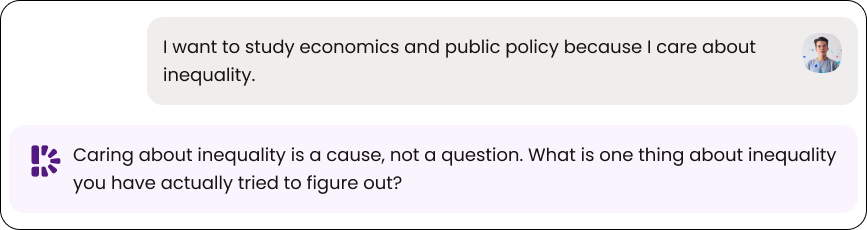
Avoid. The robotics club résumé. The sentence “I have loved math since I was five.” Generic praise for Princeton engineering that could be pasted into any application. And writing about engineering as a career plan rather than a thing you have done.
3. Your Voice: how your lived experience has shaped you (400 to 500 words)
The prompt. Princeton values community and encourages students, faculty, staff and leadership to engage in respectful conversations that can expand their perspectives and challenge their ideas and beliefs. As a prospective member of this community, reflect on how your lived experiences will impact the conversations you will have in the classroom, the dining hall or other campus spaces. What lessons have you learned in life thus far? What will your classmates learn from you? In short, how has your lived experience shaped you? (Please respond in 400-500 words.)
What Princeton is testing. Whether you can turn an experience into something usable in a room full of people who did not have it. This is the longest essay in the supplement and the one Princeton weights most. The prompt asks three questions at once: what you learned, what your classmates will learn from you, and how the experience shaped you. It also names the setting, which is a conversation with people who disagree with you. The reader is not looking for a hardship. They are looking for a stance you now hold and can explain.
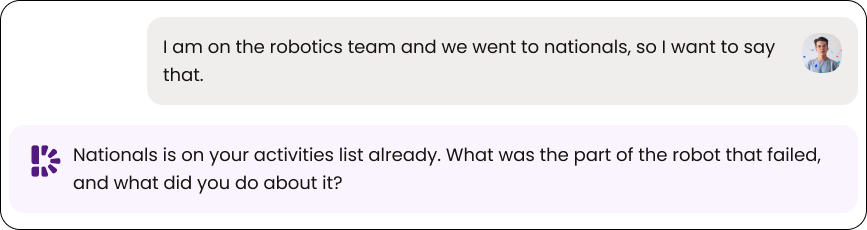
How to answer. Pick one experience, not a life summary. Organize your response by spending roughly a third on a specific scene, a third on what it taught you, and a third on how that lesson shapes the conversations you’ll have with others. For the last part, describe a real moment where that lesson changed how you handled a disagreement, or an honest description of what you would say to a classmate who sees it differently. Answer “what will your classmates learn from you” in one or two plain sentences. Do not leave it for the reader to infer.
Avoid. Repeating your Common App essay. Princeton reads both and has said so in past years. Treating an identity label as the whole answer, with no scene underneath it. Claiming to be open minded without showing a time you changed your mind. And ending with a promise to bring diverse perspectives to campus, which is the prompt’s wording handed back to the reader.
4. Your Voice: service and civic engagement (250 words)
The prompt. Princeton has a longstanding commitment to understanding our responsibility to society through service and civic engagement. How does your own story intersect with these ideals? (Please respond in 250 words or fewer.)
What Princeton is testing. Whether service is something you have done or something you say. Princeton’s informal motto is “In the nation’s service and the service of humanity,” and this prompt is the direct descendant of it. Notice the words “responsibility to society.” That is wider than volunteering. Caring for a family member, holding a job that other people depend on, and showing up for a civic duty all count. The reader wants to see one responsibility you took on and what you understood afterward.
How to answer. One obligation, one scene, one reflection. Say what you did, what it cost you, and what it taught you about responsibility that you did not know before. “Intersect with these ideals” means you should connect your story to the idea of service in one sentence, not build the essay around Princeton’s motto. 250 words is about 120 on the scene and 100 on what it changed.
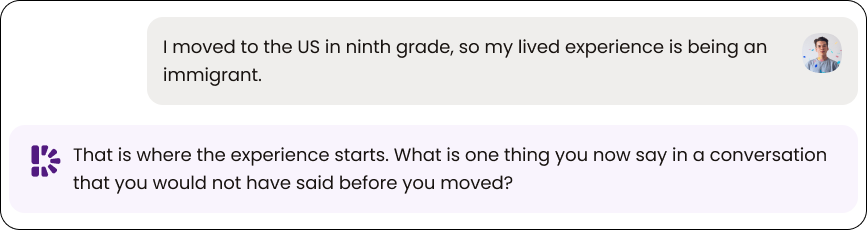
Avoid. The hours count. The mission trip told as a transformation. Service described as a line on a résumé rather than a thing with a cost. And any sentence about changing the world. The strongest versions of this essay are small and specific.
More About You: three answers of 50 words each
Princeton says there are no right or wrong answers here and tells you to be yourself. Take that literally. 50 words is two sentences. Princeton reads the three together, so they form a quick portrait of you whether you plan it or not. Plan it. Each answer should contain a concrete noun, something a reader can picture. Each should come from a different part of your life. Do not write a 50 word essay with a thesis. Answer the question and stop.
One warning. Readers can tell when a detail was chosen to seem interesting rather than because it is true of you. A plain true answer beats a clever invented one every time.
5. What is a new skill you would like to learn in college? (50 words)
What Princeton is testing. Whether you see college as a place to become something, not just a place to get in. The best answers name a skill you cannot do today and why you want it, in a way that shows how you plan to use your four years.
How to answer. Name the skill in the first sentence. Use the second to say why it is missing and what it would let you do. A skill can be practical, academic or social. “Reading a balance sheet” and “arguing with someone without getting quiet” are both real answers.
6. What brings you joy? (50 words)
What Princeton is testing. Whether you can be specific about something that is not an achievement. The reader has seen your accomplishments. This is the one question with no strategic answer.
How to answer. The smallest true thing. A specific moment, a specific object, a specific person. “Music” is a category. “The ten seconds after my little brother finally lands a kickflip” is an answer.
7. What song represents the soundtrack of your life at this moment? (50 words)
What Princeton is testing. Not your taste. The reason. The phrase “at this moment” is the point. The reader wants to know what this season of your life feels like to you.
How to answer. Name the song and the artist, then spend the rest on why it fits right now. Do not pick a song to seem impressive or deep. If your most played track this month is a pop song and the reason is real, that is the answer.
The graded written paper
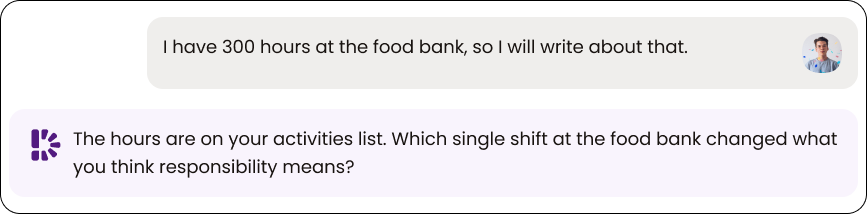
Princeton also asks for a paper you already wrote for a class, with the teacher’s grade and comments on it. This is not an essay to write. It is a choice to make. Pick the paper that shows your thinking, which is not always the one with the highest grade. A paper with a real argument and a teacher’s comment that you answered in a later draft tells the reader more than a clean A on a summary. Princeton’s graded written paper page sets the rules on subject, length and recency, and it is linked below. Read it before you choose.
Before you write: map the whole application
Your personal statement, activities list and the Princeton pieces are read as one file. Each piece should add something the others do not. Repeating an interest is fine. Repeating the same evidence wastes space. Think of the reader as someone who has already read everything else in your file before they reach the Princeton questions.
Write down what the reader already knows about you from the Common App. Then give each Princeton piece one thing that list is missing. As you plan and draft, remember to check Princeton’s guidance on AI and essays.
Want help connecting the pieces? Dakota, in College CoPilot’s Application Coach, uses what you have already shared to spot repetition and ask the question you have not answered. The writing stays yours.